

20 March, 2025
By : Parasher Vedic Center
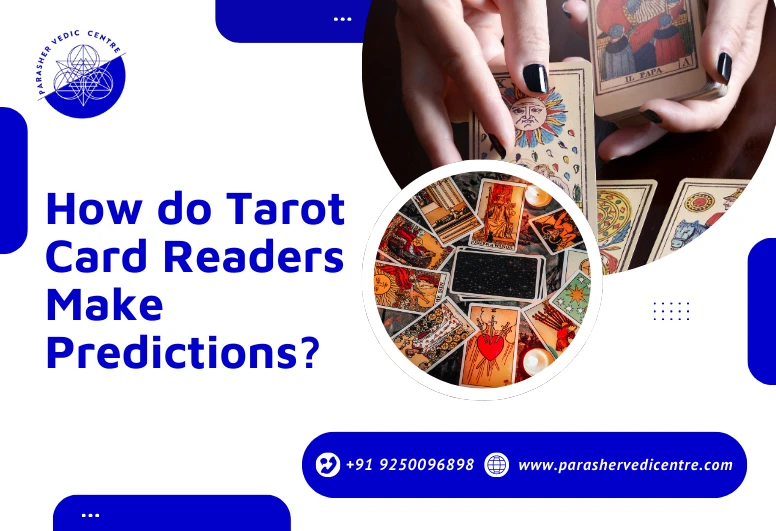
Let’s be honest—most of us have stared at a tarot card and wondered, “How can this possibly know anything about my life?”
And yet, somehow, it does.
You ask a question to tarot card readers, draw a few cards, and suddenly you're staring at answers you didn’t even know you were looking for.
But how?
Tarot isn’t magic in the flashy sense. It’s not about predicting lottery numbers or showing you who you’ll marry next year. It’s about reflection. Interpretation. A moment of pause in a noisy world.
Every tarot deck has 78 cards, full of symbols, archetypes, and emotion. But here’s the thing: the cards don’t shout out fixed answers. They whisper. And what they say depends a lot on who’s listening.
A beginner might look at The Tower and panic. An experienced tarot card reader sees something more layered—yes, destruction, but also release, transformation, even relief.
That’s why two people can read the same set of cards and walk away with very different stories.
It’s not just about what the card is. It’s about where it shows up, what’s next to it, and what energy is in the room.
Some people treat tarot like a vending machine. Ask a question, pull a card, get your answer.
But a seasoned tarot card reader knows better. They don’t just read cards—they listen to them. They also listen to the person sitting across from them. The question. The hesitation in their voice. The silence after the answer is revealed.
That’s where real insight lives.
A good tarot card reader doesn’t throw meanings at you. They help you find what the tarot card is saying to you. Because the same card won’t speak the same way to everyone.
There’s a belief that tarot readers are born with some gift. Maybe. But more often, it’s built slowly, over time.
It comes from pulling cards again and again. From noticing patterns, remembering reactions, watching what unfolds after the reading is done.
Some tarot readers journal every draw. Others meditate on symbols. Many treat their deck like an old friend—shuffling it quietly at night, asking questions of their own.
This long, consistent connection with the tarot cards creates something powerful. The tarot reader doesn’t just "know the meaning." They feel it.
And that feeling—the gut sense of what’s really being said—is what makes some readings hit deep.
It's not about fancy setups or dramatic flair. A meaningful reading is about how the reader holds space.
They don’t rush. They don’t impose. They help you explore.
They might pull just three cards and say very little—but what they say sticks with you for days. Because it came from a place of understanding, not performance.
That’s the kind of tarot reading people remember. And the kind that makes them come back, not for predictions, but for perspective.
Tarot is becoming more popular in India, but not everyone who owns a deck knows how to truly read it. That’s why some tarot card readers stand out.
You’ll know when you meet one.
They won’t tell you what to think. They’ll ask you what you feel. And somehow, even without many words, the cards will speak through them.
That’s not psychic practice. That’s presence. That’s experience. That’s someone who knows how to sit with your story without trying to fix it—just help you understand it better.

Celebrity Astrologer Pooja Sharrma, has extaordinary mystic and calculation experties when it comes to Astrology, Vasstu and Numerology. For expert astrology assistance, connect with top Astrologer in Gurgaon Sector 66 for personalized astrological guidance for various issues.
Copyright © 2025 Parasher Vedic Centre. All Right Reserved





.png)